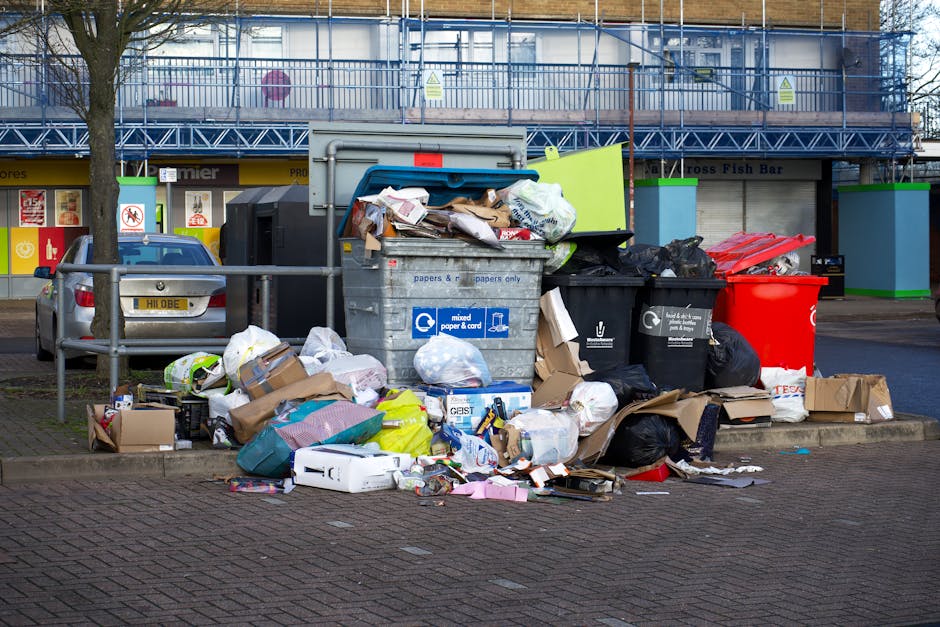
House clearance licences and waste rules in Lea Bridge
If you are planning a house clearance in Lea Bridge, the boring bit is also the bit that matters most: licences, waste handling, and proof that your rubbish is going where it should. It is not glamorous, but it can save you a headache later. Whether you are clearing a flat after a move, dealing with an inherited property, or emptying a loft full of "we'll sort that out one day" boxes, the rules around house clearance licences and waste rules in Lea Bridge shape how the job should be done.
Done properly, a clearance feels simple. Items are sorted, reusable things are separated, and waste leaves the property with the right paperwork and the right carrier. Done badly, it can turn into fly-tipping, council complaints, and a mess you never meant to create. In this guide, we will walk through the practical side of compliance in plain English, so you can make sensible decisions without needing to become a waste law expert overnight.
Table of Contents
- Why House clearance licences and waste rules in Lea Bridge Matters
- How House clearance licences and waste rules in Lea Bridge Works
- Key Benefits and Practical Advantages
- Who This Is For and When It Makes Sense
- Step-by-Step Guidance
- Expert Tips for Better Results
- Common Mistakes to Avoid
- Tools, Resources and Recommendations
- Law, Compliance, Standards, or Best Practice
- Options, Methods, or Comparison Table
- Case Study or Real-World Example
- Practical Checklist
- Conclusion
- Frequently Asked Questions
Why House clearance licences and waste rules in Lea Bridge Matters
House clearance is not just a van, a few strong arms, and a quick trip to "somewhere off the A12." In the UK, waste has to be carried, sorted, and disposed of responsibly. That matters in Lea Bridge because the area is busy, residential, and tightly connected to wider East London waste enforcement. If waste is left on a pavement, tipped on an unlicensed site, or carried by someone who cannot show proper authority to transport it, the person who arranged the clearance can still end up answering questions.
That is the bit many people miss. You do not need to be the one driving the vehicle to get caught out by poor practice. If you hire the wrong operator, or if you assume all clearance jobs are automatically compliant, you could be linked to the problem. To be fair, that is a pretty unpleasant thing to discover after the fact.
There is also the local side of it. Lea Bridge has a mix of Victorian terraces, estates, maisonettes, converted homes, and busy roadside access points. That means clearance work often has to be planned around parking, shared access, loading times, and neighbours who will notice if a job is noisy, untidy, or dragged out. Good compliance is not only about the law. It is about keeping the job smooth and keeping the street onside.
For many customers, the safest approach is to work with a team that understands both removal services and the waste side of the job, rather than treating house clearance as a casual one-off task.
Expert summary: In Lea Bridge, a good house clearance should leave you with three things: a clean property, a clear conscience, and a paper trail that shows the waste was handled properly. If any one of those is missing, something was done badly.
How House clearance licences and waste rules in Lea Bridge Works
At a practical level, house clearance usually follows a straightforward chain: inspect, sort, load, carry, and dispose. The rules sit around that chain like guardrails. The carrier must be allowed to transport waste, the waste must go to a lawful destination, and the material should be handled in a way that reduces environmental harm where possible.
Most people use the phrase "licence" loosely. In reality, what matters is whether the business is properly authorised to carry waste, whether it uses legitimate disposal or recycling routes, and whether it can show records if asked. A compliant operator should not sound vague when you ask where the rubbish is going. If they get a bit slippery at that point, that is your cue to slow down.
There is usually a distinction between clearing reusable household items and removing waste. Furniture may be suitable for reuse, some appliances may be recycled, and other items may need to be processed as waste. A sensible clearance team will separate those categories rather than throwing everything into one load and hoping for the best. That sort of sorting can make a real difference to cost, convenience, and environmental impact.
Where a job overlaps with moving rather than pure clearance, it can help to use a provider that also handles home moves or a man with van service, because the same planning discipline often keeps both parts of the job tidy and compliant.
One more thing: if a clearance includes items that need special handling, such as electrical equipment, mattresses, or bulky furniture, the job gets more complex. Not impossible. Just more finicky. A small detail, but an important one.
Key Benefits and Practical Advantages
Choosing a compliant clearance approach is not just about avoiding trouble. It can make the whole process feel calmer and more controlled. Here are the biggest practical advantages people notice.
- Less risk of fines or complaints: If waste is handled correctly, there is far less chance of enforcement problems later.
- Better sorting for reuse and recycling: Usable items can be separated instead of being treated as landfill-bound rubbish.
- Cleaner handover of a property: This matters when you are dealing with landlords, buyers, solicitors, or family members.
- Clearer pricing: A properly planned clearance is easier to price because the team knows what they are dealing with.
- Less stress on the day: A well-run team arrives with a plan rather than improvising outside your front door.
There is also a quieter benefit people often underestimate: confidence. If you know the clearance is being done by a team that understands waste rules, you do not spend the evening wondering whether your old sofa has been dumped behind a retail park. That peace of mind is worth a lot.
For households clearing large volumes, many customers find it useful to compare clearance against dedicated house removals or mixed-support options such as man and van removals, especially when some items are being kept, moved, or donated rather than discarded.
Who This Is For and When It Makes Sense
This topic matters to anyone who needs items removed from a home in Lea Bridge, but the exact reason changes the priorities a bit.
- Homeowners: If you are downsizing, renovating, or clearing out after years in one property, compliance matters because the volume can be bigger than you expect.
- Tenants: End-of-tenancy clearances need to be tidy, fast, and lawful. Landlords do notice abandoned items. So do deposit schemes, unfortunately.
- Families handling probate or bereavement: These jobs are often emotionally heavy, so having a straightforward and lawful clearance process removes one layer of pressure.
- Buy-to-let landlords and agents: Properties often need complete clear-outs between occupants, and the paper trail matters if disputes arise.
- Small businesses with domestic-style stock or office furniture: If the job involves desks, chairs, archive material, or mixed junk, you may also need commercial moves style planning.
There are also jobs that look simple but are not. A spare room might seem like "just a bit of clutter," then you open a cupboard and find old paint tins, broken electronics, and three radiators. Happens all the time. That is why the best approach is to treat every clearance as a sorting exercise first and a loading exercise second.
Step-by-Step Guidance
If you want a compliant house clearance in Lea Bridge, a sensible process beats a rushed one every time. Here is a clear way to think about it.
- List what is staying and what is going. Walk room by room and separate keep, donate, recycle, and dispose. Even a rough list is better than guessing on the day.
- Identify anything that needs special handling. Electrical items, heavy furniture, sharp objects, or anything contaminated should be flagged early.
- Ask about waste handling before booking. A legitimate operator should be able to explain how waste is transported and where it usually goes.
- Check access and parking constraints. Lea Bridge streets can be awkward for larger vehicles. Time spent planning access usually saves time and money later.
- Request a clear quote. If the job is volume-based, describe the rooms, access, stairs, and any awkward items honestly. Surprises tend to cost more.
- Keep records. Save your quote, booking confirmation, and any collection details. If a waste transfer note or similar record is provided, keep that too.
- Inspect the result. Before the team leaves, check that nothing has been missed in cupboards, lofts, under beds, or behind doors. It sounds obvious. People still forget.
If you are arranging a larger property clear-out, or bundling clearance with packing and moving, support from packing and unpacking services can keep the job organised instead of becoming a last-minute scramble.
A small practical note: if there are sentimental items in the property, set them aside first, not after the van has arrived. You really do not want to discover a photo album at the bottom of a pile of old mail.
Expert Tips for Better Results
After enough clearance jobs, the same few habits keep saving time and preventing problems.
- Separate reusable items early. A chair fit for reuse should not be mixed with broken timber if you can avoid it.
- Photograph tricky rooms before the job starts. This helps with quotes and avoids "I didn't realise there was that much" conversations.
- Be honest about access. Narrow staircases, no lift, controlled parking, and long carries all matter.
- Ask what happens to mixed loads. A good provider should explain sorting, recycling, and disposal clearly.
- Use a team that is used to local jobs. In a place like Lea Bridge, where access can change from street to street, local awareness helps.
One little tip from the real world: clear the easy stuff first. Coat hangers, bags, papers, loose items. Once the small clutter is gone, the bigger items feel less overwhelming. It is funny how that works, but it really does.
If you are comparing providers, look beyond headline price. A slightly higher quote may include the right handling, proper loading, and less risk. Cheap is not always cheap, if you know what I mean.
Common Mistakes to Avoid
Most clearance problems come from rushing or assuming too much. The same few errors come up again and again.
- Using an unverified carrier: If a provider cannot explain how waste is handled, walk away.
- Leaving everything mixed together: Reuse, recycling, and disposal all get harder when the load is a jumble.
- Ignoring special waste: Some items need extra care, and pretending otherwise can cause real issues.
- Forgetting access details: A van that cannot park legally or close to the property creates delays and extra cost.
- Not keeping paperwork: If anything is queried later, records help show that you acted responsibly.
- Overfilling skips or vehicles: Unsafe loading is not just inefficient; it can be dangerous.
Another common one is the "it'll be fine" approach. Usually said with a shrug. Usually where the trouble begins. A tidy plan is boring, yes, but it works.
When the clearance is tied to a move, choosing a provider with experience in removal company work can reduce the chance of sloppy handling, because the same discipline tends to apply across both services.
Tools, Resources and Recommendations
You do not need specialist equipment to start planning a compliant clearance, but a few practical tools help a lot.
- Room-by-room checklist: A simple paper or phone note is enough.
- Camera phone: Useful for documenting contents, access points, and the condition of items.
- Labelled bags or boxes: Helpful for separating keep, donate, recycle, and waste.
- Measuring tape: Handy when checking whether large furniture will fit through stairwells or doors.
- Calendar reminder: Especially useful if the property has a deadline, such as a sale completion or tenancy end date.
In terms of service selection, it is sensible to compare a clearance-only approach with a broader moving solution. If the job includes furniture relocation, a furniture pick up service may suit some items better than disposal. For more general transport, a removals option may be more efficient. And if the move is small and flexible, man with a van can be the practical middle ground.
For readers who want to understand broader service quality and standards, the site's insurance and safety page and health and safety policy are sensible places to look for reassurance. No fuss, just a clearer picture of how the work is approached.
Law, Compliance, Standards, or Best Practice
Waste handling in the UK is regulated, and the general principle is simple: if you carry waste as part of a business, you should be authorised to do so and you should dispose of it lawfully. In practice, that means checking the operator's credentials, using approved disposal or recycling routes, and keeping the right documentation where required.
Householders also have responsibilities. If you hand your rubbish to someone who later dumps it illegally, you may be asked how you checked them. That is why it is worth asking a few practical questions before you book:
- What happens to the items after collection?
- Do you separate reusable goods from waste?
- How do you handle electricals, bulky items, or mixed loads?
- Can you explain your waste handling process clearly?
Best practice is not complicated. It is really just thoughtful planning, honest descriptions of the job, and a provider that takes the waste side seriously rather than treating it as an afterthought.
If you are booking a wider move and clearance together, reviewing the provider's terms and conditions can help you understand responsibilities around access, cancellations, and job scope. A little dull, yes. Still worth it.
Options, Methods, or Comparison Table
Different clearances call for different methods. Here is a simple comparison to help you judge what fits best.
| Method | Best for | Advantages | Watch-outs |
|---|---|---|---|
| Full house clearance | Large properties, probate, end-of-tenancy, major decluttering | Fast, comprehensive, easier to manage in one visit | Needs accurate description and lawful waste handling |
| Partial clearance | Single rooms, lofts, garages, selected items | More targeted, usually cheaper, less disruption | Sorting still matters, especially for mixed loads |
| Clearance plus removal | When some items are kept, some moved, some discarded | Efficient for busy households and relocations | Requires clear instructions so nothing important is removed |
| Vehicle-led man and van support | Smaller loads or flexible collections | Handy for awkward access and lighter jobs | May not suit very large or highly mixed clearances |
In many Lea Bridge jobs, the right answer is not one method forever, but a mix. For example, clear the waste from the loft, move the usable furniture, and pack the personal items separately. That kind of hybrid plan often feels much calmer on the day.
Case Study or Real-World Example
Here is a typical Lea Bridge scenario. A family is clearing a two-bedroom flat after a relative moves into care. The property contains furniture, old magazines, a few electrical items, boxed kitchenware, and some items that may still be reusable. There is also a tight staircase, and parking is not generous. Classic London job, really.
The first step is not loading. It is sorting. The family separates personal keepsakes, identifies the furniture they want to retain, and marks items for donation or disposal. The clearance team then checks access, estimates the load, and plans the vehicle position so the job does not block neighbours or sit halfway across the pavement.
On the day, reusable items are set aside, waste is loaded in a way that avoids damage or spillage, and the team keeps the route clear. The property is left tidy, and the family keeps a copy of the booking details and any waste-related paperwork provided. Nothing dramatic happened. Which, in clearance work, is usually a good sign.
The real win here was not speed alone. It was control. Everyone knew what was leaving, what was staying, and what needed special care. That is what good compliance looks like in practice.
Practical Checklist
Use this before booking or starting a house clearance in Lea Bridge.
- Make a room-by-room list of items to keep, move, donate, recycle, or dispose of.
- Flag bulky, heavy, sharp, or electrical items early.
- Check access, stairs, parking, and loading space.
- Ask how the provider handles waste and recycling.
- Confirm the quote includes the full scope of the job.
- Keep photos of the property and contents if the job is sensitive or complex.
- Set aside personal documents, valuables, and sentimental items before collection day.
- Keep booking records and any disposal paperwork you receive.
- Walk the property once the clearance is complete.
- Make sure any agreed donations, reuse items, or retained furniture have been clearly separated.
Get a free quote today and see how much you can save.
Conclusion
House clearance licences and waste rules in Lea Bridge are really about responsibility, not bureaucracy for its own sake. If you choose a provider carefully, ask the right questions, and keep the job organised, the whole process becomes much easier. The property is cleared properly, waste is handled lawfully, and you do not end up wondering where anything went.
That is the sort of outcome people want, even if they do not say it out loud. Clean floors, no loose ends, no awkward surprises. Simple enough, but not always easy unless the clearance is planned well.
If your clearance is part of a move, a downsizing job, or a property handover, using a trusted local team and understanding the waste side early will save time and stress. And frankly, in a busy place like Lea Bridge, a smooth job is worth a lot.
Frequently Asked Questions
Do I need a licence for a house clearance in Lea Bridge?
Usually the business carrying the waste needs the right authorisation, not the homeowner. But you still need to choose a lawful operator and make sure your waste is handed over responsibly.
How do I know if a clearance company is handling waste properly?
Ask where the waste goes, how reusable items are separated, and whether they can explain their disposal process clearly. A trustworthy provider will answer without dodging the question.
Can I leave a house clearance company to sort everything out?
You can, but it is better to separate personal items, valuables, and anything you want to keep before the team arrives. That reduces mistakes and keeps the job moving.
What happens to furniture that is still in good condition?
Reusable furniture may be kept aside for reuse, donation, or separate transport rather than being treated as waste. The exact route depends on the provider and the item's condition.
Are electrical items treated differently during a clearance?
Often, yes. Electrical items may need separate handling because they can contain components that should not be mixed with general waste. It is best to flag them early.
What should I do if the property has a loft or cellar full of mixed items?
Take photos, make a rough list, and share as much detail as possible before booking. Mixed storage areas can hide awkward waste, so a proper assessment helps a lot.
Is a man and van service suitable for a house clearance?
It can be, especially for smaller jobs or lighter loads. For a fuller clearance, you may need a more substantial removal setup. The right choice depends on volume and access.
Do I need to keep paperwork after a clearance?
Yes, keeping booking records and any waste-related paperwork is sensible. If questions arise later, it gives you a clear record of what was arranged.
What if I need both moving and clearance help?
That is common. A combined approach can work well if some items are being kept, some moved, and some disposed of. Planning the split in advance is the key.
How far in advance should I book a clearance in Lea Bridge?
If the job is large, time-sensitive, or linked to a tenancy end or sale, book as early as you can. Smaller jobs are often more flexible, but access and parking still need planning.
Can waste be dumped anywhere if it is just household rubbish?
No. Household waste still needs to go through lawful channels. Illegal dumping can create serious problems, even if the items look harmless at first glance.
What is the best first step if I feel overwhelmed?
Start with one room. Pick out what must stay, what can go, and what needs checking. Once you have that first small win, the rest usually feels much more manageable.